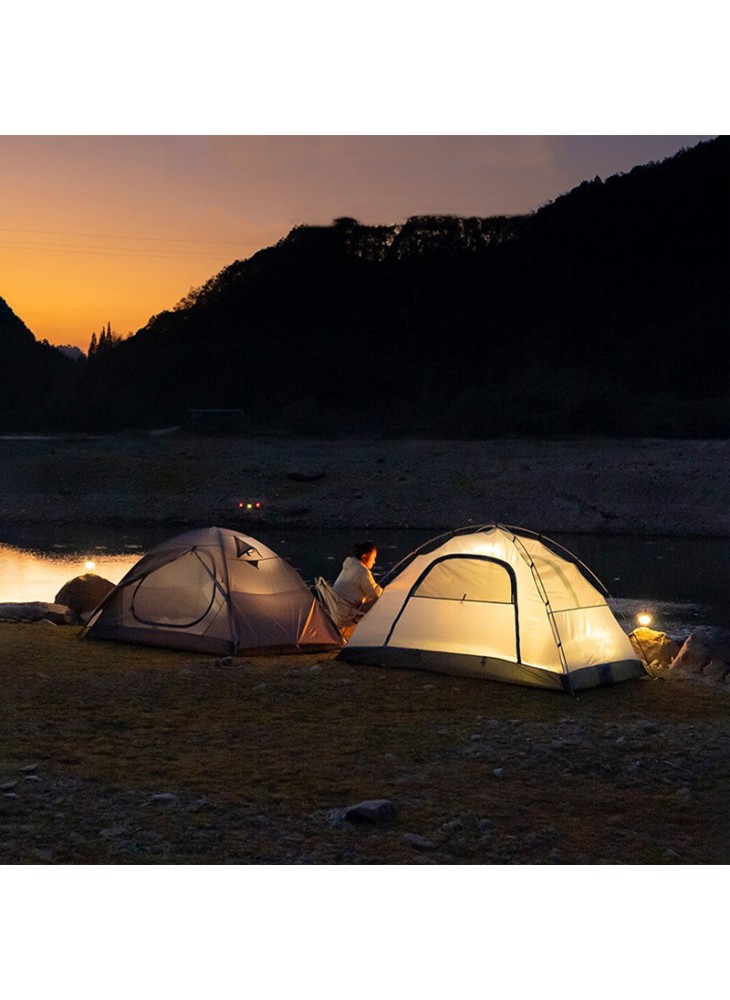
【Structural Design Analysis】
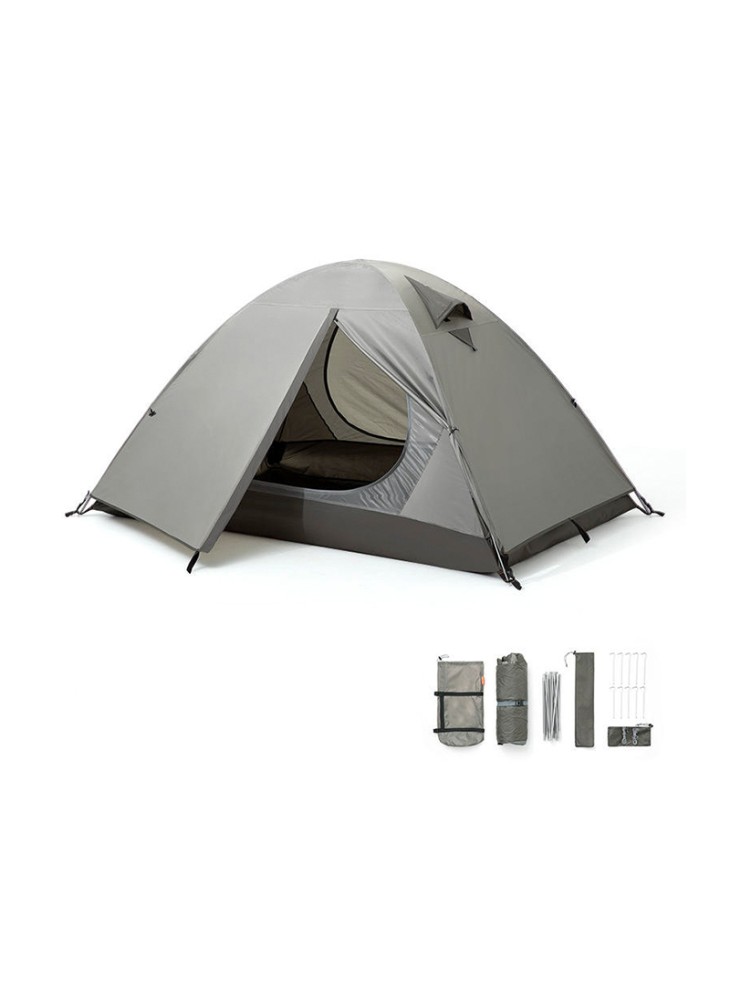
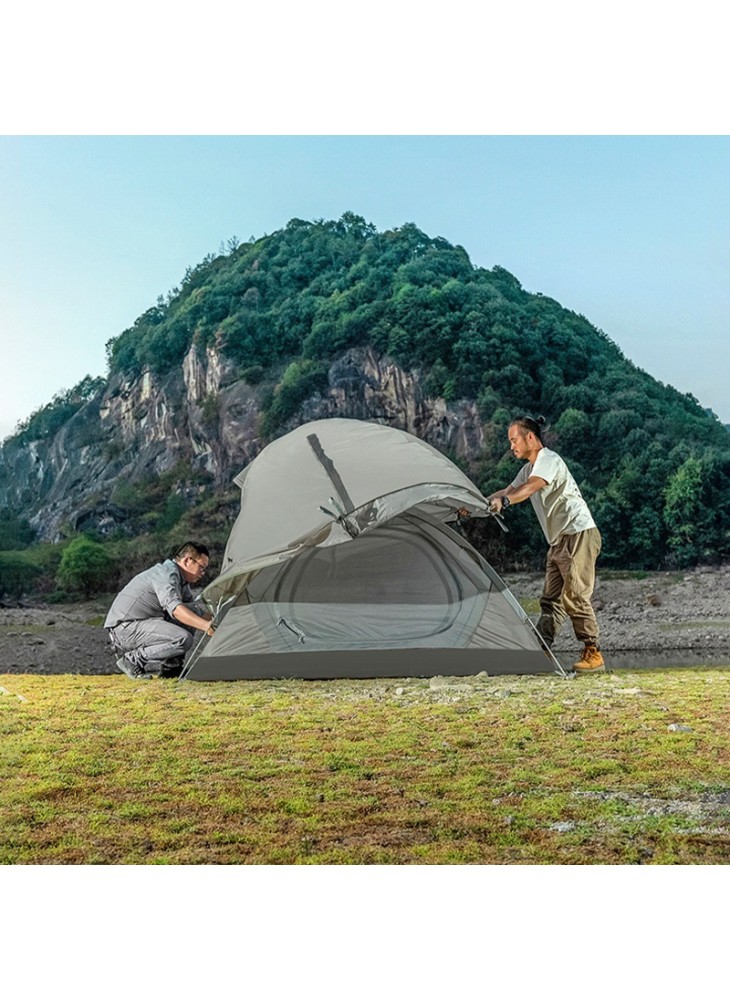
1. Double-Layer Structure (Inner Tent + Outer Tent)
The inner and outer tents are completely separable.
Sunny Days: The inner tent can be used alone; lightweight, breathable, and mosquito-proof.
Rainy Days / Strong UV Exposure: The outer tent covers the tent, forming a complete protective system.
2. Advantages of the Double-Layer Structure
Effectively reduces condensation.
Improves insulation and wind resistance.
Wideer range of applications (mountaineering / hiking / camping / high altitudes)
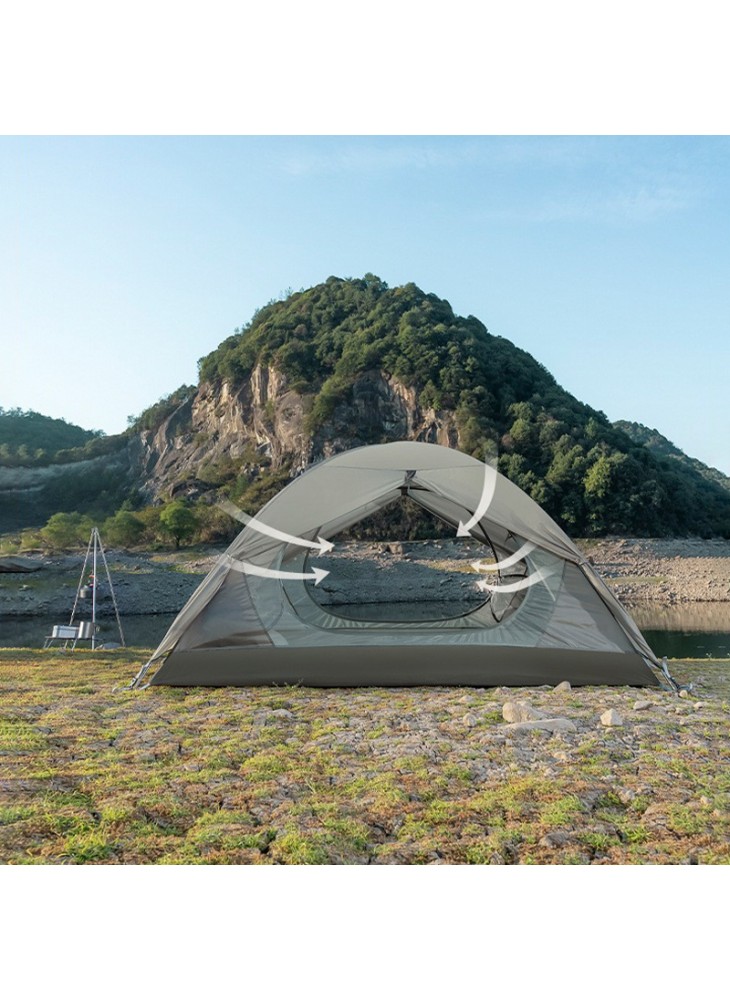
【Double-Door Design】
Two people can enter and exit simultaneously without interference, eliminating the need to "climb over each other to exit".
Higher ventilation efficiency, with double doors creating a convection airflow.
One side for entry and exit, the other side can be used for equipment storage or ventilation.
【Frame and Support】
1. Durable Aluminum Alloy Tent Poles
High strength + High toughness: Can be bent freely, wind-resistant and not easily broken
Compared to fiberglass poles: Lighter, more resistant to low temperatures, and stronger fatigue resistance
Suitable for mountaineering, long-distance hiking, and frequent setup/packing
2. Structural stability
Archive or cross structure distributes stress evenly
Strong resistance to crosswinds, suitable for mountains, grasslands, and campsites